Panama Canal Transit – Puntarenas

Panama Canal Transit – Puntarenas

Puntarenas, Costa Rica, was our first port of call after transiting the canal. I was looking forward to visiting Puntarenas as my tour included a visit to an active volcano. The bus ride up to the volcano was long, but was worth it. Our tour guide was great, can’t remember his name, he was very passionate about his country and it’s history with the added benefit of a good sense of humour, some of which may have been a little subtle for a few on the tour.

DSC05104

DSC05105
A living fence
DSC05116
DSC05119

Costa Rica is a very attractive and diverse country, which we glimpsed during our bus rides to and from the Volcano. A place that definitely deserves a return visit. Our bus ride took us through coffee and fruit plantations, but we were not lucky enough to stop and grab a cup of the local coffee!

DSC05194DSC05271DSC05273 

DSC05107
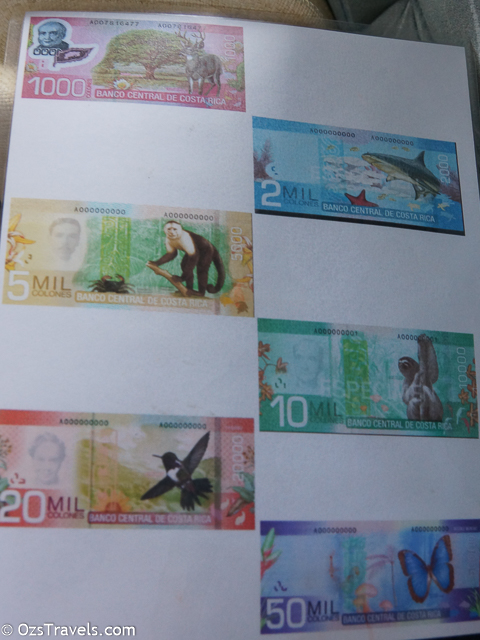
Costa Rican Money
DSC05128
DSC05129

    Our first destination was the Poas Volcano where we were lucky enough to have a fairly clear day and we were able to see the Laguna Caliente, hot lagoon, which is one of the most acidic lakes in the world. Once we got back onto the bus our guide informed us that we had been very lucky to have such a clear day as usually the lake is obscured by steam / fog.

DSC05130
DSC05132
DSC05133
DSC05135
DSC05134
DSC05136
DSC05137
DSC05138
DSC05139
DSC05140
DSC05141
DSC05144
DSC05145
DSC05146
DSC05148
DSC05154
DSC05156
DSC05158
DSC05159
DSC05161
DSC05162
DSC05163
DSC05165
DSC05170
DSC05171
DSC05172
DSC05176
DSC05177
DSC05178
DSC05180
DSCN0359
DSCN0360
DSCN0361
DSCN0362
DSC05188
DSC05190
DSC05191

  After the volcano we headed to a small town for a “local” lunch in a small tourist cafe, it was fairly good, made me more interested in returning to Costa Rica to try more of the food.

DSCN0364
DSCN0365
DSCN0367
DSCN0366
DSC05210

  The second part of the tour was visit of an Ox Cart workshop in Sarchi where we able to watch the artisans build and decorate the Ox Carts that the town is famous for. Sarchi is also home to the world’s largest Ox Cart. Whilst arts and crafts are not usually my thing I did see a couple of interesting items and the workshop was pretty interesting.

DSC05219
The Worlds Largest Ox Cart
DSC05221
DSC05222

DSC05216

The Ox Cart Workshop

DSC05224
DSC05226
DSC05227
DSC05229
DSC05231
DSC05234
DSC05235
DSC05236

DSC05237
DSC05238

DSC05240
DSC05241
DSC05242
DSC05245
DSC05247
DSC05250

The souvenir shop in Sarchi sold ox carts including one that was designed to be used as a mobile bar, a couple I met were interested in buying one, but they were disappointed when they realised that the cart would not accommodate the liquor bottles that they usually buy, 1.5 gallon bottles don’t fit!

DSC05248
DSC05249

DSC05251

  From Sarchi it was back to the port via the Pan-American Highway, this was the first time I had travelled along a section of the highway, I have since travelled along a few more sections and also been to the start / finish of it in Ushuaia, Argentina. Travelling the length of the Pan-American Highway is on my bucket list!

PNT-006 POAS VOLCANO AND SARCHI 

This national park is one of the most popular and attractive excursions that take place in the northern Central Valley. The road to Poás is an amazing landscape of shades of green coffee plantations, punctuated by flowers, sugar cane and strawberry fields. Sitting at 8,500 feet above sea level, the volcano is one of the few active craters in the Americas. Famous for its geyser-like eruptions of gas and ash, the main crater is an enormous pit 1.5 kilometers in diameter and 300 meters deep, making it one of the largest in the world. The crater is usually active with smoke discharges. At the bottom of the crater there is a hot, circular lagoon that measures 350 meters across, where water temperatures range between 40º C and 70º C.There is also a Visitor’s Center, where you can enjoy exhibits on the history and other aspects of this still-active volcano. After the visit to the volcano’s, a traditional lunch will be served at a charming restaurant surrounded by rainforests, greenery, and flowers. Before returning to your ship, you’ll stop in Sarchi, which for over a century has been the center of production of the hand-painted oxcart. There you will be able to see the artisans painting a wide variety of woodcrafts, and you can find a large selection of leather goods, oxcarts, and all kinds of souvenirs. The town of Sarchi is very picturesque, with many of its houses beautifully decorated with the ornamentation used on the oxcarts.

 Please note: Due to the volcanoes altitude of 8,500 feet, the tour is not recommended for guests with heart conditions.

Panama Canal Transit – Part 3

Panama Canal Transit – Part 3

After transiting the Atlantic Locks we entered the Gatun Lake, the man-made dam that was created as a part of the building of the canal. As we had to wait our turn to transit the Pacific Locks we slowly transited the Gatun Lake.

890
891
892
896
899
900
901
905

A hulk transiting the canal towed by two tugs.

907
913

917
918
922

923
Markers used to inform the pilot when to turn, not so necessary these days because of the use of GPS

The Centennial Bridge

927
931
932
933
936

942
948
952
950

  The Norwegian Jewel preparing to enter the first of the Pacific Locks, the Pedro Miguel Locks.

939
943
953
954


956
The arrow indicates which lock the next vessel is to use
957
The guys in the row boat getting reading to assist us
962
969
971
974
977
979
983
984
986
990
994
995
997
999
1004
1006
1009
1012
1013
1014
1018
1020
1024
1032
1034
1036

After transiting the Miraflores Lake the Norwegian Jewel prepares to enter the Miraflores Locks, the final two locks before completing the transit of the Panama Canal and entering the Pacific Ocean

1038
1044
1046
1049
1050
1052
1055
1061
1062
1064
1068
1070
1071
1073
1074
1078
1080
1082
1083
1086
1087

The Panama Canal Visitor Centre where you can watch the various vessels transiting the Miraflores Locks.

1089
1093
1097
1110
1111
1113
1114
1120
1121
1125
1126
1129
1133
1136
1140
1142
1143
1150
1152
1157
1158
1163
1166
1168

This swing bridge used to be used by vehicles that needed to cross the canal, they have been replaced by the Bridge of the Americas and the Centennial Bridge

1171
1178

Looking back towards the next vessels that are about to transit the Miraflores Locks

1181
1182
1183
1185

The New Canal Locks Being Built

1193
1194
1198
1199
1202

1209

The Bridge of the Americas

1230
1240
1241


1245

The BioMuseo or The Biodiversity Museum: Panama Bridge of Life, it was still under construction when we passed it.

1246
1247

The finished BioMuseo

Biomuseo1-1

Panama City

1222
1216
1252
1272


1271

Panama Canal Webcams

Panama Canal Transit – Part 2

Panama Canal Transit – Part 2

The photos in this post are of the Navigator’s transit of the Atlantic Ocean side locks.

630
630
631
632
633
635
636
639
640
642
645
647
648
649

The French Cut

652
653

The queue ahead of us and the tugs coming out to guide us into the locks

654
658
661
666
668
669
671

The most efficient way to get the lines from the ships to the pier is by using two men in a row boat, they have apparently tried everything else, powered boats, using some sort of air power grappling hook, but that are just not as good as two men in a boat.

672

673
675

To guide / pull the various ships through the locks locomotive tugs are used.678 682

683
684
687
688
689
692
693
694
695
696
699
700

The Captain, Staff Captain (Executive Officer) and Pilot

701

704
706
711
712
715
719
724
725
727
729
730
732
733
736
739
740
742
744
745
746
747
751
752
753
760
762

I took these photos from my balcony

766
767
768
770
771

775
778
780
781
782
788
792
795
801
813
815

Back up to the upper deck for the transition through the third lock, it was at this point that we noticed that the Norwegian Jewel was stuck in the second lock.

816
823
824
828
832
834
836
837
842
843
844
845

There was a problem with the ladder from the walkway on the top of the lock up to the pier. I have no idea why their only solution was to try and pull the ladder back into shape by hand, would have expected some sort of tools, an oxy cutter or similar, that they could have used to cut away the problem. Fairly certain that this took around an hour or more to resolve.848 849 851 853 856 859 867 872 874 876 879 886 888

We made it through with no problems, the Navigator was now 85Ft above sea level.

Panama Canal Transit – Part 1

Panama Canal Transit – Part 1

The transit through the Panama Canal was, for me at least, the main event of the cruise and it did not let me down.

miraflores center1

After experiencing the canal first hand I can understand why it is considered one of the greatest man-made achievements. The history of the canal first started with the French, the same person who ran the dig of the Suez Canal thought he could do the same in Panama, one problem, there is a few hills in the way, so digging a wide trench is not feasible.

panama-canal-2a

After the French company went bust due to poor engineering skills, financial mismanagement, corruption and a very high mortality rate due to Malaria and Yellow Fever, the idea was taken over by the US, who purchased the rights to the canal from the French.

The US employed engineers and people with experience in building significant projects like railroads who decided that the approach that the French were intending to use was not feasible and developed a new approach that would incorporate gravity fed locks, three on each side of the canal. They would also have to build a large dam, it was the largest in the world at the time, fight off malaria and yellow fever, it was during the building of the canal that the way to fight Malaria and Yellow Fever was identified, the eradication of mosquitoes, the occasional issue with the locals and to orchestrated the declaration of Panama’s Independence from Colombia, the term “Gun Boat” diplomacy was coined as a part of this. The building of the canal took 10 years and was completed in 2014. For more detail try the Wikipedia links for the Panama Canal and also Health Measures During the Construction of the Panama Canal.

0524-sci-subPANAMA2
Lock-Comparison-pre-post-ex
LOCKS-inglés2

The main limitation of the canal is the size of the ships, only ships and vessels that are Panamax size or smaller can transit the canal, which is why there is a project in progress to build a new set of locks that can accommodate larger vessels, a little under 3 times the size of the existing Panamax Ships. This project was meant to be completed by 2014, in time to celebrate the centenary of the canal, but they ran out of money, only a few billion, and it took a long time to arrange new the financing, which delayed its completion, the building is still in progress, not sure when the new locks are scheduled for completion now.   Our transit was to be a rare one as it is apparently unusual for two Passenger Ships to be transiting side by side, the Norwegian Jewel would be in the locks next to us as we transit the canal, they would enter first.

The next few posts will be of the photos I took during the transit. It was a great day, the one disappointment is that we did not get to visit Panama City as a part of the cruise, will have to do that some other time.

Panama Canal Transit – Cartagena

Panama Canal Transit – Cartagena

Cartagena is one of the ports on the cruise that I would like to return to visit, especially as we only had a few hours in port and I chose the wrong tour to do, sail around the Bay of Cartagena on a Spanish Galleon. Whilst the bay is very interesting, if I was to do a similar tour in the future I would try to hire a boat and explore the bay that way.

374
400

448
425
440

466
Navigator is on the left, the Norwegian Jewel is the small monstrosity on the right. The Jewel had a similar itinerary to us and we were both docked in multiple ports during the cruise. We even transited the canal at the same time.
443
455

446
456

From the ship and the galleon the city itself looked to be an interesting mix of modern and colonial buildings, also everything I have read about the place indicates that is great place to explore. Will have to get back there!

CTG-004   BAY CRUISE ON A SPANISH GALLEON

Journey back in time to the days of the Spanish Main during this cruise on the Bay of Cartagena aboard a replica of a 17th-century Spanish galleon.

After receiving your safety instructions from your guide, you will depart the pier aboard a beautiful replica of a 17th-century Spanish galleon for a 2-hour cruise on the Bay of Cartagena.  Throughout the cruise, your guide will point out sites of interest and inform you about Cartagena’s history.

As you glide along the bay, you will have an opportunity to observe the area from the perspective of the pirates and seafarers that plied these waters long ago.  You will see the massive ramparts originally built to protect Cartagena, the beautiful clock tower marking the entrance to the Walled City and Cartagena’s dramatic skyline, which is dominated by the domes of the Church of San Pedro Claver.  Next, you will pass by Fort Manzanillo, which guards the eastern entrance to the inner bay, then make a loop between Tierrabomba Island and the Castillogrande Peninsula.  Weather permitting, your boat will continue past the beaches of Bocagrande.

Your cruise will include a folkloric dance and drumming show, along with complimentary beer, soft drinks and bottled water served on board.  Guests are encouraged to bring cameras, as there will be plenty of photo opportunities.

Following your cruise, you will be returned to the pier

478
These guys have traveled along way!! Checkout the flag that they are sailing under.
469
484


482

485
486
489
491
495
501


505

509
509-2
520
522

  Whilst sailing around the bay I spotted some strange looking submersibles and semi-submersibles. The Colombian and US anti drug smuggling agencies caught the smugglers associated with these vessels and have put them on show with a new paint job to show off their successes.

496
523


497

Cartagena is Navy town as well and is home to a number of the Columbian Navy’s ships and submarines.

471
472
525
534


540
544
549
556

After the cruise on the Galleon I still had an hour or so before I had to return to the ship before our early afternoon departure so I decided to checkout the bird sanctuary and I am glad that I did.

562
565

  This Macaw was not camera shy!

569
572
573
574

593

589


598

581
584
585

603
The galleon that we sailed on around the bay


Panama Canal Transit – Georgetown, Grand Cayman

Panama Canal Transit – Georgetown, Grand Cayman

After a day at sea in the Florida Straits we arrived at our second port of call was Georgetown, Grand Cayman. As Georgetown does not have a wharf capable of handling cruise ships, we were transferred from the ship to the wharf by tender.202

205

The day was a special one for me as it was Anzac Day and our  joker / storyteller / onboard lecturer / historian Terry Bishop held an Anzac Day Memorial Service at sunrise. Anzac Day is the Australian and New Zealand equivalent to the USA’s Memorial Day and Remembrance Day in Europe. If you get a chance to sail on a cruise with Terry, make sure you attend his lectures, on our cruise he linked each port to the previous port with some historical fact culminating in San Francisco with an unexpected tie into to our cruise, but will leave that until I post about San Francisco.

164

174

Charter fishing boats heading out for the day, they may have been a better option for a bit of fun instead of the SubmarineAs the day was Anzac Day and as I was a member of the Royal Australian Navy’s Submarine Squadron I thought it would be fun to go on the Atlantis Submarine Tour, unfortunately this was not the case. Whilst the Submarine component was not bad, the whole idea of the tour was to dive off the reef adjacent to Georgetown and view the coral and associated sea life. Unfortunately, due to the amount of sea traffic in the vicinity of the reef most of the coral had died, therefore the sea life have left the area and the water is extremely cloudy as you can see in my photos below. This is a real shame and the politicians in Australia should take note that any chance of this happening to the Great Barrier Reef is not acceptable, therefore stop trying to come up with ways to allow more shipping and even dredging anywhere near the Reef!!!

207
Charter boats heading out for a day of fishing, probably would have been more fun that the Submarine!

Before my tour I had a few hours so I took the opportunity to wander the streets of Georgetown around the wharf area. This area is a duty free shopping zone, filled with some fairly high-end jewelry and watch boutiques, from what I saw the prices were high, so not a place I would recommend for shipping. One place I did find that was reasonable was a Cuban Cigar store, their prices were the cheapest that I saw throughout the cruise. I had a conversation with the owner and he told me that he regularly purchases cigars from Australia as he is able to get good quality aged and rare Cubans from a supplier there, I was surprised as Cuba is only an island away but even more surprised when I found out I knew the guy who he buys them from. It is a small world.

350
The Navigator is the ship on the left. She is “tiny” when compared to the other two ships that were in port.
209
214
217
216

218

226

Of all of the ports on this cruise, Georgetown was my least favourite, but I guess if you were to visit the other areas on Grand Cayman you may have a totally different experience to mine.

222

GCM-006   ATLANTIS SUBMARINE

Experience the undersea beauty of Grand Cayman during this scenic journey aboard an authentic submarine. 

Depart the pier aboard a transfer vessel for the brief ride to the Atlantis Adventure Center, and your Atlantis XI Submarine.  Specifically designed for civilian passengers, the submarine maintains sea-level pressure so as to have no ill effects on the ears.  She is 65 feet long, 13 feet wide and weights 80 tons, and can carry 48 passengers and three crew members.

Your first sight of the submarine will be as it breaks the surface from its previous trip. Once moored alongside the submarine, you will safely embark its deck via a ramp and enter the air-conditioned cabin through a large hatch.  After the hatches are secured and pre-dive safety checks are completed, you will begin your descent.  As the Atlantis Class pilot navigates the submarine, you will glide through the clear water and explore Grand Cayman’s Underwater Marine Park to depths of 100 feet.  Along the way, you will see an abundance of huge barrel sponges and star corals on the reef, and an occasional stingray or turtle passing by within a few feet of your large viewing port.

After your submarine ride and before returning to the dock, you will be able to watch as the submarine again descends on another excursion, completely disappearing from your sight beneath the surface on its next journey to the depths below.

Following your submarine tour, you will be transferred back to the pier. 

Please note:  This tour involves a 300-yard walk from the pier to the Atlantis office.  Guests must be able to negotiate a 10-step ladder in order to enter and exit the submarine.  Minimum height is three feet tall and the minimum age to participate is four years of age accompanied by a parent or guardian.  This tour may not be exclusive to RSSC guests.

231

237
240
241
250
252
254
256
257
259
260
264
270
285
286
287
288
292
293
294
295
297
298
301
304
305
306
307
308
309
310
312
314
315
317
323
324

335

343
344
348
351
357